
Calories & macros
for video recipes.
Turn the recipe you found on TikTok, Instagram Reels or YouTube into a clearer picture of what you’ll eat — with estimated calories and macros per 100 g and for your portion.
Recipes work today in Telegram. Nutrition is planned.
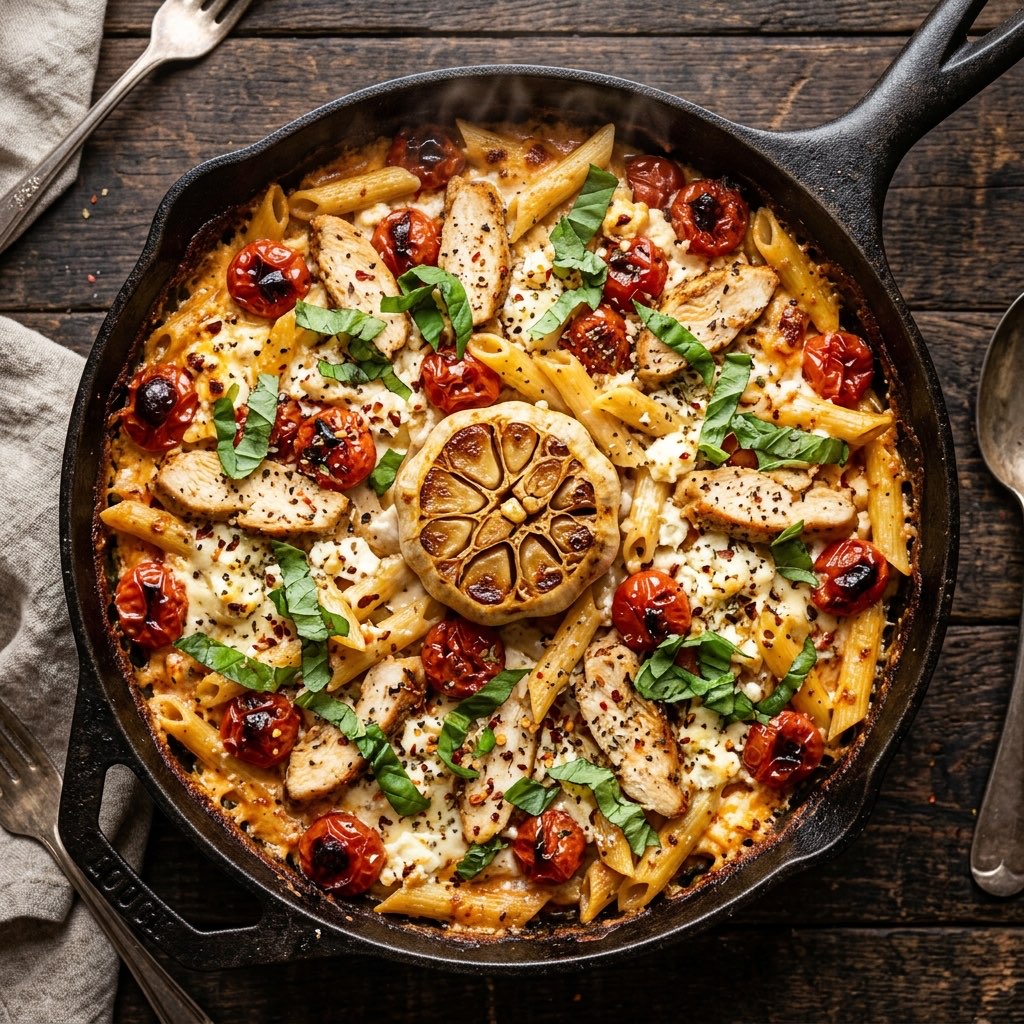
One-Pan Baked Creamy Chicken Feta Pasta
Based on estimated finished weight, not raw ingredients.
Approximate values. USDA ingredient data and an AI-estimated cooked weight; not measured.
How this example was estimated
Assumptions: 200 g raw chicken breast, 10 g olive oil, 30 g peeled garlic and 480 g water instead of broth. The recipe’s 200 g dry pasta, 200 g tomatoes and 150 g feta are retained. Optional herbs are omitted; all sauce and oil stay in the dish.
Ingredient calories and macros are calculated from USDA FoodData Central (SR Legacy). Finished weight is AI-estimated at about 1,140 g (1,050–1,210 g), not weighed. Different quantities, brands or cooking losses change the estimate.
Ingredients 9
- 1 chicken breast (or chicken thigh)
- 200 g pasta (penne or fusilli)
- 1 head of garlic
- 200 g tomatoes (ideally cherry)
- 150 g feta cheese
- 2 cups chicken broth (or water)
- Olive oil, salt, pepper
- Provencal herbs (optional)
- Fresh basil or parsley for garnish (optional)
Cooking steps 5
- Preheat the oven to 200°C (392°F), keep the garlic head whole, and halve any large tomatoes.
- In an ovenproof skillet, place the chicken, drizzle with olive oil, and season, then arrange the garlic head and tomatoes around it and place the feta on top.
- Add the pasta and pour in the chicken broth so the pasta is covered.
- Bake covered for 25-30 minutes, then uncover and bake for 10-15 minutes more until browned.
- Slice the chicken, squeeze out the soft roasted garlic, toss everything together, and garnish with basil or parsley.
From a saved video
to a recipe you understand.
We’re exploring nutrition as part of your recipe, alongside the ingredients and steps.
Start with what caught your eye.
Send a cooking-video link. Link2Eat already turns it into a readable recipe.
See what’s in your portion.
Estimated cooked weight and macros per 100 g — then a simple view of the amount you’d like to eat.
Keep it for next time.
The idea: reopen the estimate with your saved recipe whenever you make it again.
A few useful details.
How to estimate calories in a video recipe
Ingredient quantities and cooking methods inform the estimate. The finished dish’s weight then connects the total to 100 g or your portion. Added oil and discarded fat also matter. See FAO’s recipe-composition method .
Can I use nutrition estimates today?
Not yet. Link2Eat currently turns public cooking videos into recipes saved in Telegram. Calories and macros are planned.
Why use cooked weight?
Cooking changes a dish’s weight as water is absorbed or lost. The planned estimate would account for this, showing nutrition per 100 g of the finished dish and for your portion. You could refine it with a measured cooked weight.
What if an ingredient amount is missing?
Missing quantities make the estimate less certain, especially for oil, cheese and sauces. Assumed amounts need to be made clear.